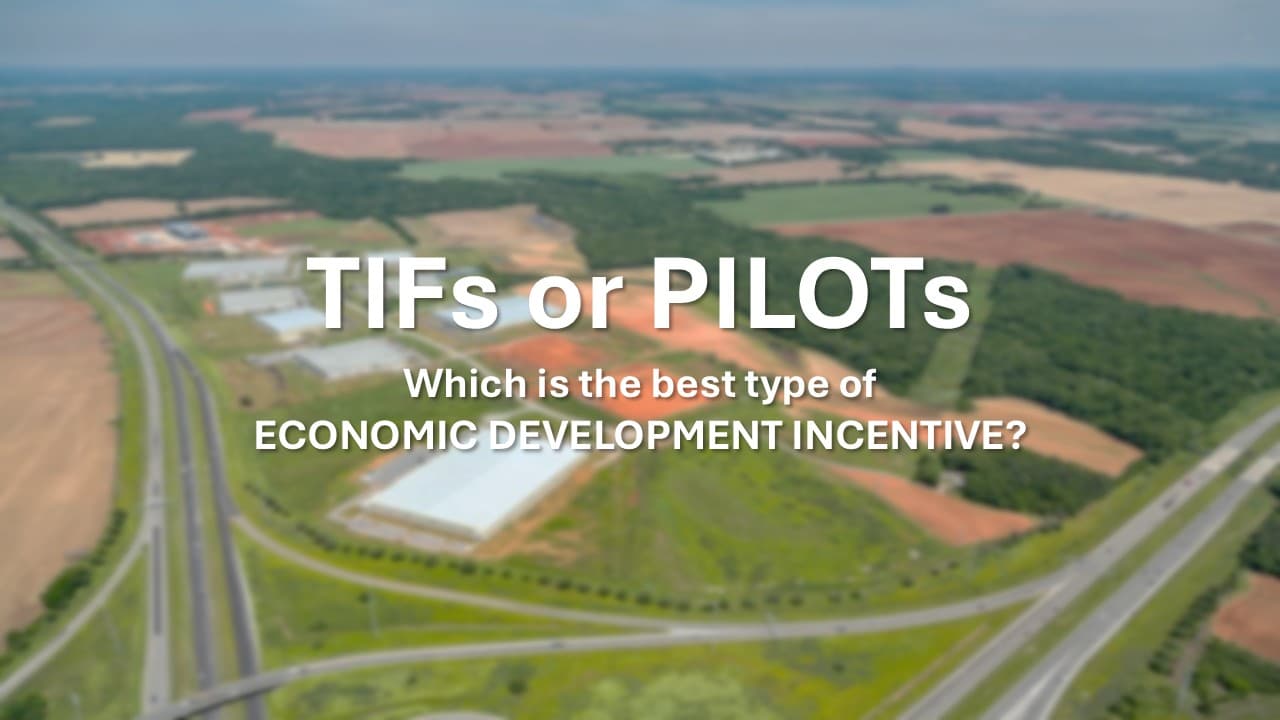
As we scour the Southeast for the next great SouthPoint Business Park location, many of the communities we work with ask which is the best industrial incentive program. Just as with real estate in general, it depends on: location, location, location! We have built many industrial parks in many locations, and it depends on the particular situation in each location.
Understanding the Two Incentive Programs
The two incentive types are really designed to solve different problems. PILOTs or “Payment In Lieu Of Taxes” programs are designed to attract new industries to locations that are already set up with all the proper utilities and infrastructure. A PILOT will reduce the property tax burden (both Real Estate and Personal Property, i.e. industrial machinery) for companies making a significant investment in expanding their business operations.
This can make the difference in whether or not a company can afford to make such a large investment. Communities essentially rebate to the taxpayer new revenues they would not have received if the company did not locate in their community. Additional positive economic benefit from increased employment also adds to the economic vitality of a community. It is a good way to help get the best return from the assets a community already has.
When to Use a TIF (Tax Increment Financing)
A TIF or “Tax Increment Financing” on the other hand is designed to help communities that lack the needed infrastructure to even be considered by industrial prospects. If a community has land, but not the industrial-grade utilities to support a manufacturing operation, they will not get even a glance from the site selectors. An industrial park must have high-volume and pressure water, sanitary sewer, natural gas, and megawatts of electrical capacity available today.
Utility extension projects can often take two years or more to complete. Under ideal circumstances, it can still take a year. Most industrial prospects do not want to put their business opportunity on hold for years until the utility company can get to the site to serve them.
How a TIF Works
When a community is lacking in one or more of the critical utilities, a TIF is the best approach. A TIF is a way for communities to finance the needed infrastructure investments to put their community on the site selectors’ visit list. They are structured slightly differently in different states, but the basic idea is that a loan is made to the developer to build the needed infrastructure and the loan is repaid by diverting the new tax revenues (the Tax Increment) to pay the note on the loan.
For the community, this is the same money in the PILOT situation that they would not be receiving if not for the investment in the community. This can be the conflict. If a community has already obligated the Ad Valorem tax payments to repay the loan that paid for the infrastructure, it cannot then be abated through a PILOT. This tradeoff is worth it if your community needs the infrastructure. In certain circumstances it is possible to do both.
Combining PILOTs and TIFs
Ad Valorem taxes are levied on both Real Property and Personal Property. If the Real Property Ad Valorem taxes alone are sufficient to pay the note on the infrastructure loan, then the remaining Ad Valorem taxes on the Personal Property (the manufacturing equipment) can be abated through a PILOT to attract a manufacturer to your community.
The value of the manufacturing equipment can often be much greater than the value of the real estate, so it can still be of substantial value to a prospective manufacturer. You can explore how we structure such incentive-ready locations within our site-selection and development services across the Southeast.
Summary: Choosing the Right Incentive Path
In summary, each type of incentive is valuable and effective under the right circumstances. If you know where you are and where you want to be as a community, you can decide which incentive path is right for you.
To learn more about available sites and how we partner with local governments to deliver ready-to-build industrial parks, visit our available properties or contact our team for more information.


