
The International Business Times spent some time with our CEO, Joe Hollingsworth, for a feature on what the manufacturing comeback is doing to industrial real estate. The piece is worth reading in full, and it comes down to one idea that has guided our company for a long time.
When a company chooses a building, it is not really buying square footage. It is betting a production line, a payroll, and its promises to customers on one location and one date. That is true for a manufacturer, and it is just as true for a final assembly operation or a distribution hub with equipment in the ground and hundreds of people on shift.
“What they are really buying is certainty.”
Joe Hollingsworth, International Business Times, 2026
Certainty is a word that gets used loosely in our industry, so here is what we mean by it, in the same terms Joe laid out for IBT.
Certainty starts with labor
The site selection question has changed. “The first question has shifted from what does labor cost to can I actually hire people with low turnover,” Joe told IBT. An operation that needs several hundred people within a reasonable commute, in year one and in year ten, lives or dies on the depth of the labor pool around it.
That is why we put our buildings in strong Southeast communities where the labor is, and it is the first piece of advice Joe gave in the feature: “Pick your labor market before you pick your real estate. The building can be adapted. The labor pool cannot.”
Certainty depends on power
“Ten years ago electric capacity was a line item. Today it can decide the project,” Joe said. Reshoring, data centers, and electrification are all competing for the same capacity, and companies now ask about power before they ask about the building. We confirm capacity at our parks early, and we encourage every company we talk with to do the same before committing to any site, ours included.
Certainty is measured in time
Joe put the timeline problem plainly in the feature. “A company that decides to reshore is usually already working against customer commitments. They do not have three years to spend on land assembly, rezoning and utility extensions.” And then the line that sums up most of the conversations we have: “For a manufacturer, speed is often the whole ballgame.”
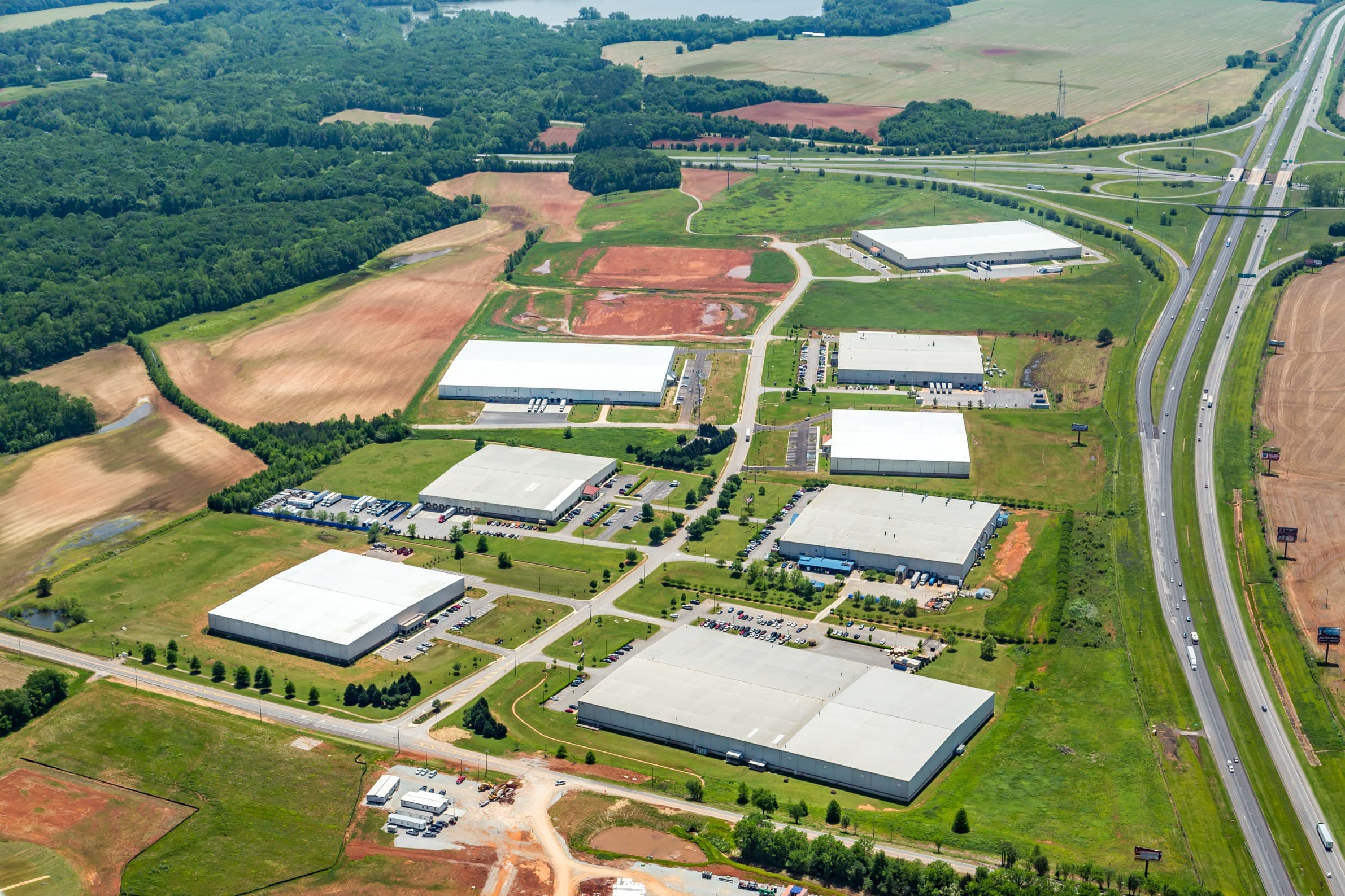
Delivering on a date requires the slow work to be finished before the first phone call. Across our SouthPoint parks, the land is owned, the sites are graded, the utilities are in, and in many cases the shell is already standing. We fund construction with our own cash and keep design and construction in house, so there is no lender or committee between a tenant and an answer. That is how a build to suit typically runs six to nine months from design to completion, and how one tenant was fully operational within 80 days of signing. Our tenants tend to describe it the same way: on time, on budget, no surprises.
Certainty improves with the right owner
There is a quieter point in the IBT piece that deserves more attention than it usually gets. The company that builds your building may not be the company that owns it in year five. Much of the industry develops to sell, which means the landlord you negotiate with is often gone before your first expansion conversation.
We have owned and operated our buildings since 1972. When a tenant commits to a location for decades, our interests stay lined up with theirs for the life of the lease, through expansions, roof decisions, and the hundred small questions that need a fast answer from someone with the authority to give one.
The bet behind all of it
“We made our bet on the Southeast decades ago, and the region keeps proving it right,” Joe told IBT. Joe made the fuller regional case on Fox Business earlier this year: labor that keeps growing, dependable power, and communities that welcome employers.
Today that bet means buildings available now in Cookeville, Tennessee, with new buildings under development in Sweetwater, Tennessee, Aiken, South Carolina, and Grenada, Mississippi. Whether your next project is a plant, a final assembly operation, or a distribution operation, the questions are the same: labor, power, and the date you have promised someone.
We would rather have that conversation early than after a company has lost a year. Reach out any time, even if your timing is still taking shape.
Read the full feature at the International Business Times: The Manufacturing Comeback Is Creating a New Kind of Industrial Real Estate Race.


