
When Fox Business wanted to explain why U.S. manufacturing just hit its highest level in more than four years, they went to someone who has spent five decades building for it. Our CEO, Joe Hollingsworth, joined Varney and Co. in August 2026 to break down the manufacturing surge and why so much of that capital is landing in the Southeast.
Watch the full Fox Business interview here.

Click to watch Joe Hollingsworth on Fox Business’s Varney and Co., August 2026.
“The Southeast has been on the cutting edge of good growth.”
Joe Hollingsworth, CEO, on Fox Business’s Varney and Co.
His answer to the central question was direct. Manufacturers keep moving capital south for the same reasons they have for years: lower costs and business friendly policies. But the headline only tells part of the story. Behind the surge is a set of fundamentals that compound over time, and they are the same factors we have organized our business around since 1972.
If your company is evaluating where to put its next plant, here is the longer version of what Joe covered in three minutes on national television.
A four-year high, but not evenly distributed
Manufacturing activity in mid-2026 reached its strongest level since 2022, with new orders growing for seven consecutive months according to the Institute for Supply Management’s manufacturing index. Reshoring, supply chain reliability, and national investment in critical industries are all pushing in the same direction.
But that investment is not spreading evenly across the country. It is concentrating where projects can actually get done. That is the pattern Joe described on air, and it is what we see in our markets every week.
Labor availability beats labor cost
The first question in site selection has shifted. It is no longer what does labor cost. It is can I actually hire.
A manufacturer needs to staff a plant with several hundred people inside a reasonable commute, and keep them through year five and year ten. The Southeast holds two structural advantages here. People keep moving into the region, so the labor pool grows while other regions shrink. And in strong smaller communities, a plant is welcomed rather than tolerated. That is why we put our buildings where the labor is, usually in strong secondary markets rather than crowded big-metro corridors. Joe has written about this at length in The Southern Advantage.
Power has become a gating item
Ten years ago electric capacity was a line item. Today it can decide the project. Between reshoring, data centers, and electrification, manufacturers are competing for available capacity, and they now ask about power and reliability before they ask about the building. Much of the Southeast runs on competitive, dependable power, and in our Tennessee markets that means TVA rates. Confirming power early, before you fall in love with a site, is the single best advice we give companies starting a search.
Speed to market decides the project
By the time most manufacturers enter the market, the clock is already running on customer commitments. The difference between a two-year project and a nine-month project is the work that happened before the search began: land owned, sites graded, utilities in place.
That is the slow work we do ahead of demand across our SouthPoint business parks. We keep buildings standing and virtually complete, so the remaining step is finishing the space around the tenant’s operation. On build to suit projects, that preparation is how we typically deliver in six to nine months, with a published 100 percent on-time record. Our tenants say it plainly: on time, on budget, no surprises.
Why national media keeps looking south
A three-minute national TV segment cannot cover labor depth, power capacity, and site readiness in detail. But the fact that the conversation is happening at all is the point. The Southeast is no longer a regional story. It is the center of gravity for American manufacturing investment, and the companies deciding where to build next are paying attention.
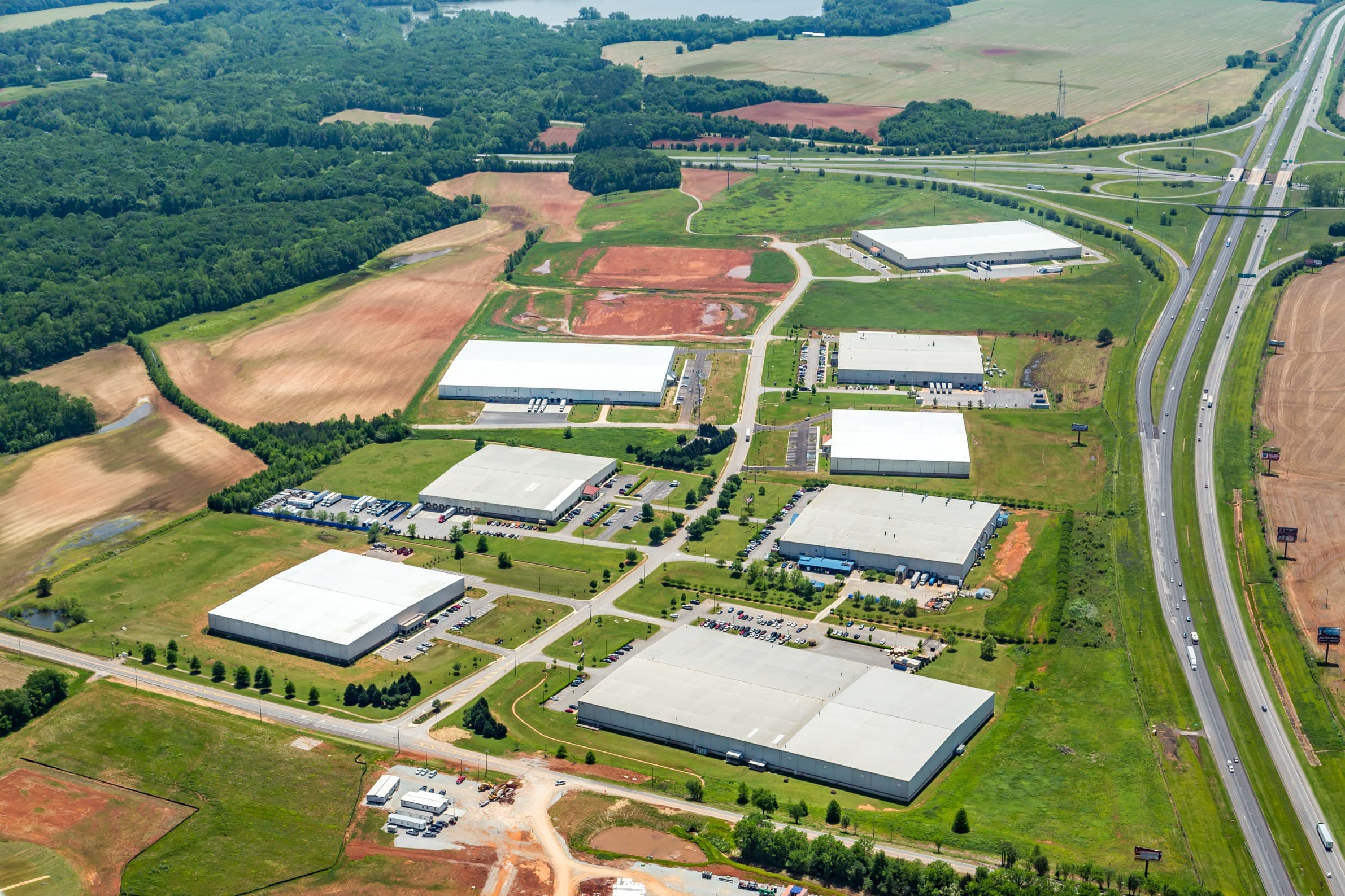
We made our bet on the region decades ago. Today that means buildings available now in Cookeville, Tennessee, and new buildings under development in Sweetwater, Tennessee, Aiken, South Carolina, and Grenada, Mississippi.
If your team is weighing a Southeast location, talk to us early, before the search narrows. The labor, power, and timeline conversation is the one Joe has with manufacturers every week, and it is better to have it before a company has lost a year.
Frequently asked questions
Why are manufacturers moving to the Southeast?
Manufacturers are choosing the Southeast for labor availability, dependable and competitive power, ready sites, and speed to market. A growing population keeps the labor pool deep, and state and local governments move at business speed, which shortens project timelines.
What should a manufacturer evaluate before choosing a Southeast site?
Pick the labor market first, because the building can be adapted and the labor pool cannot. Then confirm power capacity early, verify the site is graded, permitted, and served by utilities, and make sure there is room to expand without relocating.
How fast can a manufacturer be operational in a new building?
On ready sites, a build to suit project typically runs six to nine months from design to completion. With a virtually complete building, the timeline shrinks further; one Hollingsworth tenant was fully operational within 80 days of signing.
Where does Hollingsworth have industrial buildings available now?
Buildings are available now in Cookeville, Tennessee, with new buildings under development in Sweetwater, Tennessee, Aiken, South Carolina, and Grenada, Mississippi. All are Class A single tenant industrial buildings from a long term owner.
Watch Joe Hollingsworth on Fox Business: Southeast has been on “cutting edge of good growth,” CEO says on manufacturing surge.